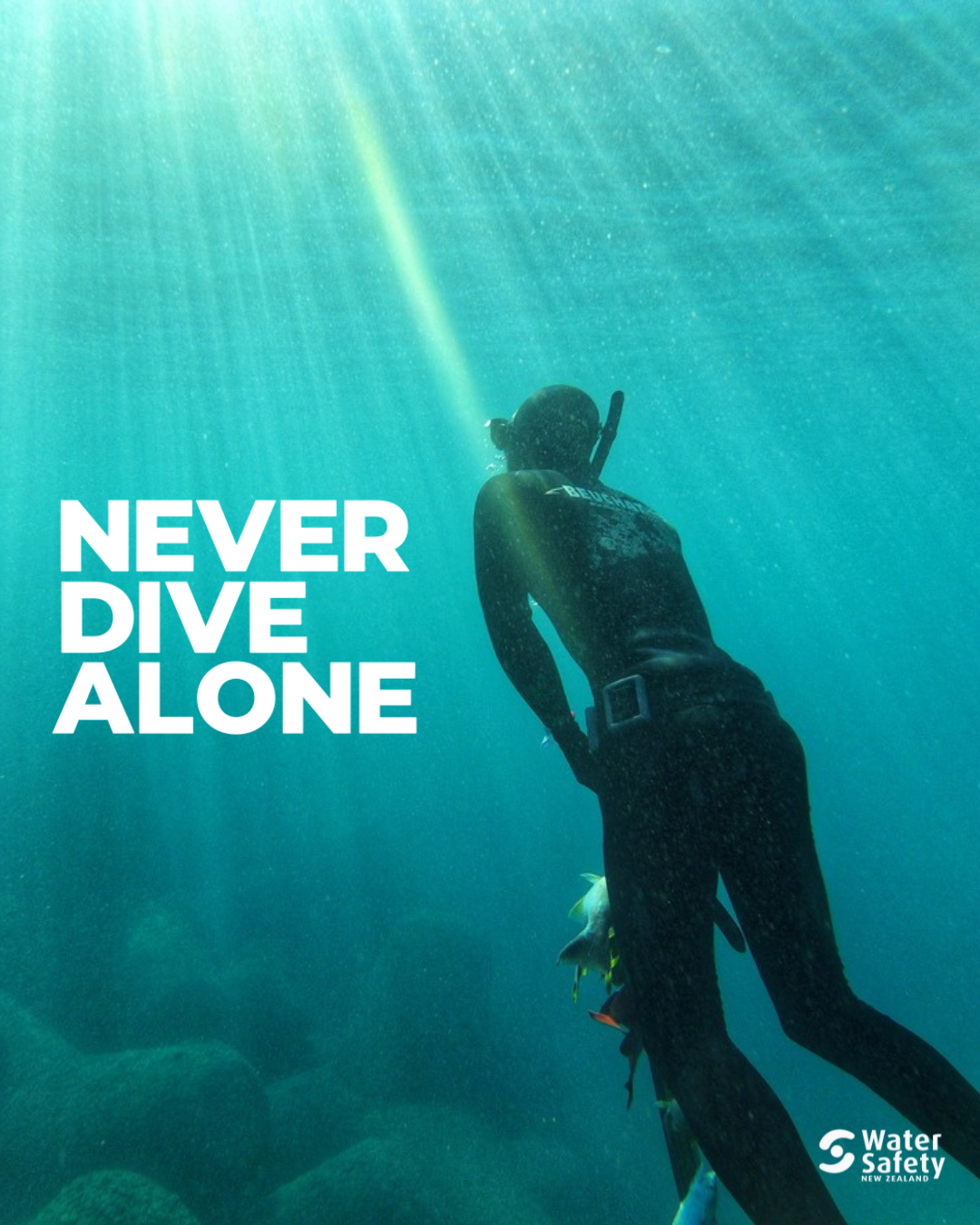
But diving is also one of the highest-risk water activities in Aotearoa.
On average, 7.9 New Zealanders die each year during underwater activities — including SCUBA diving, free diving, and snorkelling. While other countries mostly dive for recreation or tourism, here in Aotearoa the primary motivator is gathering kai for whānau and community.
Water Safety New Zealand’s Rob Hewitt says the message is simple — and it could not be more important:
"Never, ever dive alone. This message cannot be reinforced more strongly," says Hewitt. "Kai gathering increases over summer – and with it the temptation to head out quickly or squeeze in one last dive before Christmas. But no fish is worth your life. Your whānau want you at the Christmas table far more than they want extra kaimoana."
Over the last 10 years, 18 people drowned while free diving during summer.
The reality behind the statistics
More than 80% of people who drown each year are men.
In 2024:
- All underwater fatalities were men.
- 75% (three out of four) occurred when close buddy contact was not maintained.
Hewitt says that close contact is lifesaving - “Having a buddy in close contact is the vital help you need if something goes wrong underwater”
Kai gathering is linked to 26% of annual fatalities, disproportionately affecting Māori, Pasifika, and Asian communities.
As Hewitt says: “We might see ourselves as providers, hunters and gatherers - but let’s be real: men are at the highest risk of drowning in New Zealand. Whether it’s not wearing lifejackets, looking after everyone else but not ourselves, overestimating our expertise — or diving alone - we need to take extra care. Let’s get home safely. That’s most important”.
- Always dive with a buddy — and remain with them throughout the dive.
- Complete pre-dive safety checks on your equipment and your buddy’s equipment.
- Dive within your training, experience, and qualifications.
- Complete recognised training and refresher courses, especially if you have not dived recently.
- Have a clear dive plan, including emergency and communication contingencies, and ensure any support person on shore understands it.
On days like these, it’s easy to push a bit further, stay down a bit longer, or tell yourself you’ll be fine on your own. But the risks are real - and the people waiting at home matter far more than any feed.
Water Safety New Zealand is calling on all divers, whānau and communities to prioritise safety when kai gathering this summer, so that everyone comes home.