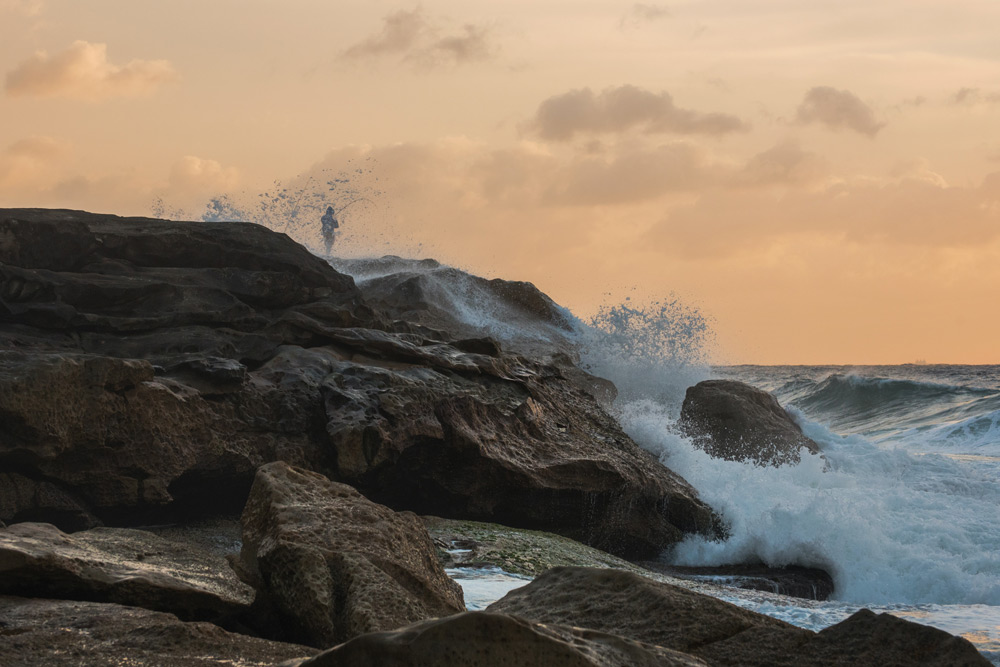
More than one million New Zealanders go fishing every year. For many, poor decision making means they get into difficulty around the water. In 2025, ten deaths were attributed to fishing from land. None of those who lost their life had a lifejacket on.
Risks
- Changing tides and wavs
- Slippery or unstable surfaces
- Changeable weather. Sudden high winds can turn a safe spot dangerous very quickly.
Staying safe
- Always wear a lifejacket.
- Take at least two forms of communication, such as mobile phone and VHF radio.
- Check the marine weather forecast including the swell, tide and wind strength and direction
- Learn water survival skills – if you fall in, you have a higher chance of surviving
- Get to know the area you will be fishing, learn from locals, listen to advice and obey all warning signs
- Leave detailed information – tell someone responsible where you are going and when you are due to return.
- Never fish alone, make sure you always take a buddy with you
Rock fishing
Rock fishing is an increasingly popular recreational past-time, but it is also extreme hazardous. Being swept off rocks by large waves is a major hazard.
Stay alert to the weather conditions
Always check the weather, severe weather warnings, coastal waters forecast and tide predictions before you leave home. Regularly check for weather updates while you're out fishing.
Remember the following when rock fishing:
- Think about what your fishing spot might be like in a few hours if the weather and tides change.
- Plan an escape route in case you get washed into the water.
- Always wear a lifejacket
- Tell someone where you are going.
- Take at least two forms of communication, such as mobile phone and VHF radio.
- Pay particular attention to swell and tide information.
- Never fish in exposed areas during rough or large seas
- Spend at least ten minutes observing the sea conditions before approaching the rock ledge
- Never turn your back on the sea
- Pay attention to warning signs
- Never fish from wet rocks where waves and spray have obviously been sweeping over them.
Fishing in rivers
- Do not enter the water if you are at all unsure. If in doubt, stay out! When wading rivers, take precautions and plan for the worst.
- Wear a wading belt and a personal flotation device. Use caution when wading into deep water at river mouths, or making river or stream crossings.
- Losing your footing when wading can be potentially hazardous and anglers can get into situations where injury or even death is a very real outcome.
- All anglers should have a healthy respect for water and before heading out should tell someone where they intend to fish and how long they intend to be.
- It is not always necessary to wade in order to fish successfully. If you are unsure about your wading ability, and you lack confidence in the water, don't wade!
- Look for suitable pools to fish that can be reached from the riverbank or by using thigh waders to go into the water to knee-depth.
- Linking arms with a fellow angler to cross a river will give you added stability, but you should proceed with caution.
For more on river fishing safety check out DOC's guide.

Know how to float
Unexpectedly entering the water is a common feature of rock fishing. Your chances of survival are significantly higher if you are wearing a lifejacket.
Without a lifejacket, your floating skills may be the key to staying alive.